Sunset Park
Industrial Lofts.
Tell us once what you're after — including the floors that never hit the listing sites. A person reads it. That's the whole thing.
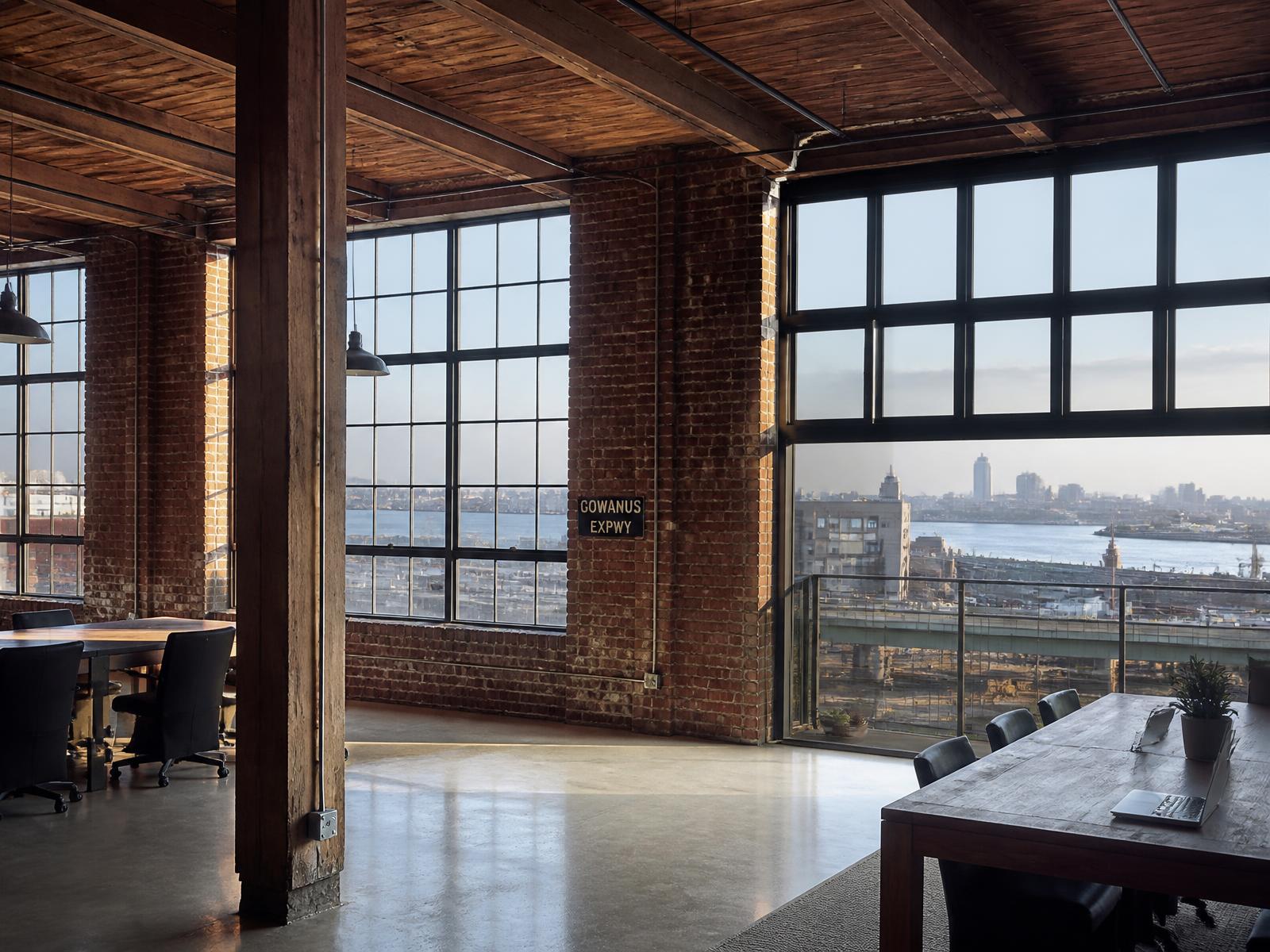
Seven questions.
That's the whole thing.
Under two minutes. No account, no login. A person reads every one.
How much room do you need?
Before you tour, hear what to look for.
Structure, submarkets, and the questions worth asking on a walkthrough — including the ones that decide whether a floor works for what you make.
Renting Unlisted Commercial Lofts in Sunset Park
A deep dive on the managed campuses, the independent upland blocks, and how the off-market floors actually trade. 12 minutes.
AI-narrated
Read the transcript
Host 1Welcome to the Deep Dive. Today we are getting right into the exact mechanics of how you find, tour, and actually secure a commercial office loft in Sunset Park, Brooklyn.
Host 2And we're basing this on some incredibly specific insights from practitioners who literally walk these industrial floors every single day.
Host 1Whether you're a custom woodworker, a media firm, or just trying to navigate this market, this is your cheat sheet. So let's unpack this — because before you even look at a map of Sunset Park, you have to understand this massive invisible line that completely splits the neighborhood.
Host 2It really does. It all comes down to who actually runs the building. That is the first filter. On one side you have the highly managed waterfront campuses: Industry City, which took over the century-old Bush Terminal blocks, and the Brooklyn Army Terminal, which is run by the city and leased through the Economic Development Corporation.
Host 1Which means formal leasing offices, published rules, highly visible processes. It's like going to an all-inclusive resort.
Host 2That's a great way to put it. If a tenant wants that corporate campus environment, they already know where the leasing office is. They don't need us for that. The real market we're digging into today is on the other side of that divide — the independent buildings.
Host 1The upland blocks. The smaller brick, timber, and masonry buildings further from the water.
Host 2Held by individual owners you lease directly from. Significantly rawer. And they almost never advertise publicly — totally off the radar for most people.
Host 1Which makes me wonder — why would a tenant choose the independent spaces? If you don't get the polished lobbies and the formal management, why go raw?
Host 2Operational freedom. Heavy fabrication tenants need raw infrastructure, not a fancy lobby. They need to deal directly with an owner, not a corporate board.
Host 1To understand why we have two totally different ecosystems sitting right next to each other, we have to look at the history.
Host 2The physical history dictates everything about this market. Go back to the 1890s: Irving Bush built Bush Terminal — an integrated complex of piers, rail lines, and massive reinforced concrete daylight factory buildings.
Host 1Which is precisely why Sunset Park has these giant factory plates on the waterfront to begin with. And then in 1918 the Army builds the Brooklyn Army Terminal. A booming multi-story manufacturing hub.
Host 2Until containerized shipping took over. Suddenly you need deepwater ports and acres of flat asphalt. You can't shove modern shipping containers up a freight elevator into a six-story building. That bottleneck killed the multi-story port model.
Host 1And at the same time the city builds the Gowanus Expressway viaduct right over Third Avenue — it basically walled the entire neighborhood off from the water.
Host 2It emptied the area out. But it accidentally preserved the neighborhood, too — it kept it from turning into another residential-heavy area like Williamsburg.
Host 1And the city kept this specific area inside a legally protected Industrial Business Zone — zoned so these buildings could never be converted to residential use. That policy is the single reason real manufacturing and fabrication space still survives here.
Host 2The makers and artisans priced out of everywhere else finally found a place they couldn't be evicted from for a luxury condo. And because that zoning protected the area, the ecosystem evolved into three distinct submarkets.
Host 1Habitat one is the managed campuses — concrete daylight factories, huge clear plates, heavy freight infrastructure. That's where you find large design firms, media companies, large-scale food production.
Host 2Habitat two is the independent upland blocks — the brick and timber ones. Woodworkers, metal shops, auto trades, artists. It's raw, it expects noise and dust, and you operate on independent owner terms.
Host 1But what if I need clients to visit? I can't drag them through a dusty corridor vibrating from a metal press.
Host 2That's habitat three, the avenue edge — closer to the R train. Ground floors and small commercial buildings near the residential border. Perfect for a shop with a showroom or a studio that takes visitors, so you don't have to cross the heavy industrial zone.
Host 1Once you figure out your habitat, you have to go tour these century-old buildings — and the briefing gives an incredible mechanical checklist for the tour.
Host 2Start with ceilings. Ask for the clear-to-deck height, but also measure the height under the lowest duct. Landlords will tell you it's a fourteen-foot ceiling and not mention the retrofitted sprinkler main dropping down three feet. Order tall equipment and it physically won't stand up.
Host 1Next, freight elevators. Weight capacity in pounds, obviously — but also whether the car opens into a shared public corridor or directly into your demised space.
Host 2If it opens into a shared hallway, your team unloads pallets into public space and then moves everything a second time through your own doors. That double handling is a huge labor cost. And in a lot of smaller independent buildings you have to ask whether a freight elevator exists at all — many are walk-ups.
Host 1Imagine signing a lease for a heavy metal shop on the third floor of a walk-up.
Host 2Which ties into floor loads. Get the rating in pounds per square foot, always in writing. Century-old timber floors cannot hold a commercial printing press the way reinforced concrete can.
Host 1And for column spacing the briefing says measure it yourself with a tape measure. Why can't I trust the floor plan?
Host 2Architectural scar tissue. A fifty-year-old plan might show twenty clear feet between columns, but over the decades a previous tenant built a cinder block chase around a column to hide plumbing. Suddenly you have eighteen feet. If your assembly line needs nineteen, you just leased a floor you can't use.
Host 1And finally, clarify whether the rent is based on rentable or usable square footage.
Host 2Managed buildings have a formal loss factor for shared lobbies and hallways. Independent buildings might just unofficially pace it out. You could be paying for phantom space if you don't explicitly define it.
Host 1Even if a space passes all these physical tests, there are brutal realities about this neighborhood you have to accept. Real estate advice almost never tries to talk you out of a neighborhood, but this briefing is blunt.
Host 2Consider the transit. The R is local and it runs along Fourth Avenue, which means walking to the waterfront buildings forces you to cross the entire industrial zone — under the Gowanus Expressway viaduct. Loud, dark, heavy truck traffic. A daily gauntlet for your team or any client coming by train.
Host 1If your business relies on a frictionless commute, that walk is a deal breaker. And the second hard truth is the shape of the market itself.
Host 2The well-known spaces are in the professionally managed campuses — wait lists and strict pricing. If you want the rawer independent owner space, you have to accept totally uneven management. One landlord might be great; the next might ignore a leaking roof for weeks.
Host 1So if you need corporate polish and a seamless commute, Sunset Park is just wrong for you. You should be in Gowanus or Downtown Brooklyn.
Host 2Knowing what you absolutely cannot tolerate is far more important than falling in love with a cool industrial aesthetic.
Host 1But say you hear all those objections and you still want one of these independent spaces. You run into the final hurdle: how do you rent a space nobody is advertising?
Host 2The campuses market themselves loudly, but the independent upland spaces move strictly person to person. It's like a secret menu at a restaurant.
Host 1Why wouldn't these independent landlords just list and get the highest bidder?
Host 2Because a public listing in this market is a nightmare for an owner. List a raw manufacturing space and you get a hundred emails from people wanting a cocktail bar, a yoga studio, or some illegal residential setup — none of which comply with the heavy industrial zoning. Landlords want reliable person-to-person networking so they don't sift through mismatched inquiries. They want a quiet tenant who pays rent and fits the building's infrastructure.
Host 1So traditional online searches just will not work here. You have to tap into the ground-level network.
Host 2And the mechanism for that is a short form posted right on this site. Seven quick questions about the commercial office loft you're looking for. No account required. A real person who actually walks these buildings reads your form, understands your mechanical needs, and connects you directly with unlisted floors.
Host 1It's the only way to access inventory that never makes it to a public listing. So we've mapped the distinct habitats of Sunset Park, given you the touring checklist, warned you about the gauntlet under the viaduct, and shown you the door to the unlisted market.
Host 2It leaves me with one provocative thought. The strict Industrial Business Zone was the only legal wall that saved Sunset Park's maker spaces from turning into luxury condos. If cities stop legally protecting their gritty industrial edges, where do the physical makers go?
Host 1Will the next generation of fabricators and builders be entirely priced out of the urban landscape? Are we going to lose the ability to physically make things inside city limits?
Host 2Something to chew on next time you walk past an old brick factory. Thanks for joining us on this deep dive — remember your floor loads, and good luck finding your commercial office loft.
Green-Wood Cemetery down to Bay Ridge, Eighth Avenue out to the harbor — with the Gowanus Expressway viaduct running above Third Avenue, splitting the industrial waterfront from the residential neighborhood upland.
Subway, ferry, and the walk that comes after.
Two subway lines, a ferry, and a walk across the industrial zone.
- 25 St
- 36 St
- 45 St
- 53 St
- 59 St
The R runs local under Fourth Avenue with a stop every few blocks — the workhorse line here. The honest part: from the platform to the waterfront buildings is a walk across the full industrial zone, including under the expressway viaduct.
- 36 St
The D and N stop at 36th Street, which cuts the ride from Manhattan or Downtown Brooklyn substantially — worth planning a team's commute around that one station.
- Brooklyn Army Terminal
A genuinely pleasant way in from Lower Manhattan or Red Hook, landing right at the waterfront — but it runs on a schedule, not a headway, so treat it as a supplement rather than the plan.
- Third Ave, the length of the industrial zone
The B37 runs under the viaduct along Third Avenue — useful for moving between the waterfront blocks without walking the whole zone.
The part that catches people out is the last leg on foot: the waterfront buildings sit on the far side of the industrial zone from the Fourth Avenue platforms, under the Gowanus Expressway viaduct. Walk the route once at your usual hour before you sign.
America's first industrial park — walled off by a viaduct, and still zoned to make things.
1890s → today
Bush Terminal rises
Irving T. Bush builds Bush Terminal on the Sunset Park waterfront — piers, rail sidings and ranks of reinforced-concrete warehouse-factory buildings operating as one integrated complex. It's often called the first multi-tenant industrial park in the country, and it's the reason this waterfront has enormous daylight-factory floor plates at all.
Brooklyn Army Terminal
The US Army adds its own scale to the south end of the waterfront with the Brooklyn Army Terminal, a pair of colossal concrete buildings to a Cass Gilbert design. Through World War II it moves millions of soldiers and tons of supply — and it leaves behind some of the largest industrial floor plates in New York.
The viaduct goes up over Third Avenue
Robert Moses opens the Gowanus Parkway — later widened into the Gowanus Expressway — on a viaduct running directly above Third Avenue. The avenue below, once a full commercial spine, goes dark under the steel. From this point on the industrial waterfront and the residential neighborhood upland are physically split, a divide every commute here still negotiates.
The port work leaves
Containerized shipping moves the port economy to New Jersey, where flat open land suits the new cranes and trucks. Bush Terminal's tenancies thin out, the Army winds down its terminal, and the waterfront empties — but unlike most of the city's industrial waterfronts, the buildings stay standing.
The city buys the Army Terminal
New York City acquires the Brooklyn Army Terminal and, through the Economic Development Corporation, begins renovating its vast floors for manufacturing and industrial tenants — a deliberate policy decision to keep industrial jobs on this waterfront rather than convert it.
The Industrial Business Zone
The city designates Sunset Park's waterfront and upland industrial blocks as a protected Industrial Business Zone, committing not to rezone them residential. It's the single biggest reason real manufacturing, fabrication and warehouse floors still exist here while they've vanished from Williamsburg.
The campuses reinvest
Private investors take over the old Bush Terminal complex — operating it today as the Industry City campus — and pour money into renovating its buildings for design, media, food production and manufacturing tenants, while the city continues building out the Army Terminal. Between and around the campuses, the independent industrial buildings quietly fill with makers priced out of everywhere else in Brooklyn.
Two markets, one neighborhood
Sunset Park's industrial space now splits cleanly: professionally managed campus floors with their own leasing operations on the waterfront, and independently owned brick and masonry buildings upland and along the avenues — rawer, quieter, often never advertised. The protected zoning covers both, which is why this remains the most genuinely industrial market in Brooklyn.
Who you'd be sharing the block with.
- Fifth Avenue's taquerias and bakeries — one of the best cheap-lunch strips in Brooklyn
- Eighth Avenue's Chinatown — banh mi, dumplings and roast meat a short ride upland
- Tacos Matamoros and the Fourth/Fifth Avenue standbys
- Food-production tenants selling at the door throughout the industrial blocks
- Sunset Park itself — harbor views over the whole industrial waterfront from the hilltop
- Bush Terminal Piers Park, tucked behind the warehouse blocks
- Green-Wood Cemetery, the borough's great landscaped landmark, just north
- The Brooklyn Waterfront Greenway route along the harbor
- Woodworking, metal and stone shops throughout the upland industrial blocks
- Garment, printing and food production in the loft buildings
- Auto trades and specialty fabricators along the avenues
- Film, prop and set shops serving the industry from big clear floors
- Costco and the big-box strip on Third Avenue
- Melody Lanes, the neighborhood's beloved bowling alley
- The Fifth Avenue commercial strip for everything day-to-day
- NYC Ferry landing at the Brooklyn Army Terminal pier
Why bother
The best floors are gone before they're listed. Character space moves through people, not portals — so we do it the other way around. You tell us what you'd love. We keep an eye out.
You told us what you need. That's where it ends.
No newsletter, no CRM queue, no "just checking in." A person reads your brief and reaches out directly when a floor's worth showing you.
- 01
We never sell, share or rent your brief — not to landlords, not to other brokers, not to a data company.
- 02
No newsletters or mass blasts. When we get in touch, it's a direct email or text about a specific space.
- 03
A person reads it. Not a bot, not a queue in some CRM.
- 04
Tell us to stop and we stop. Simple as that.
The Definitive Guide to Sunset Park Industrial Lofts
The daylight factories of the old Bush Terminal waterfront, the independent buildings upland, and how the commute across the industrial zone actually works.
Sunset Park not quite it?
We work the surrounding neighborhoods too. Mention it in the brief.
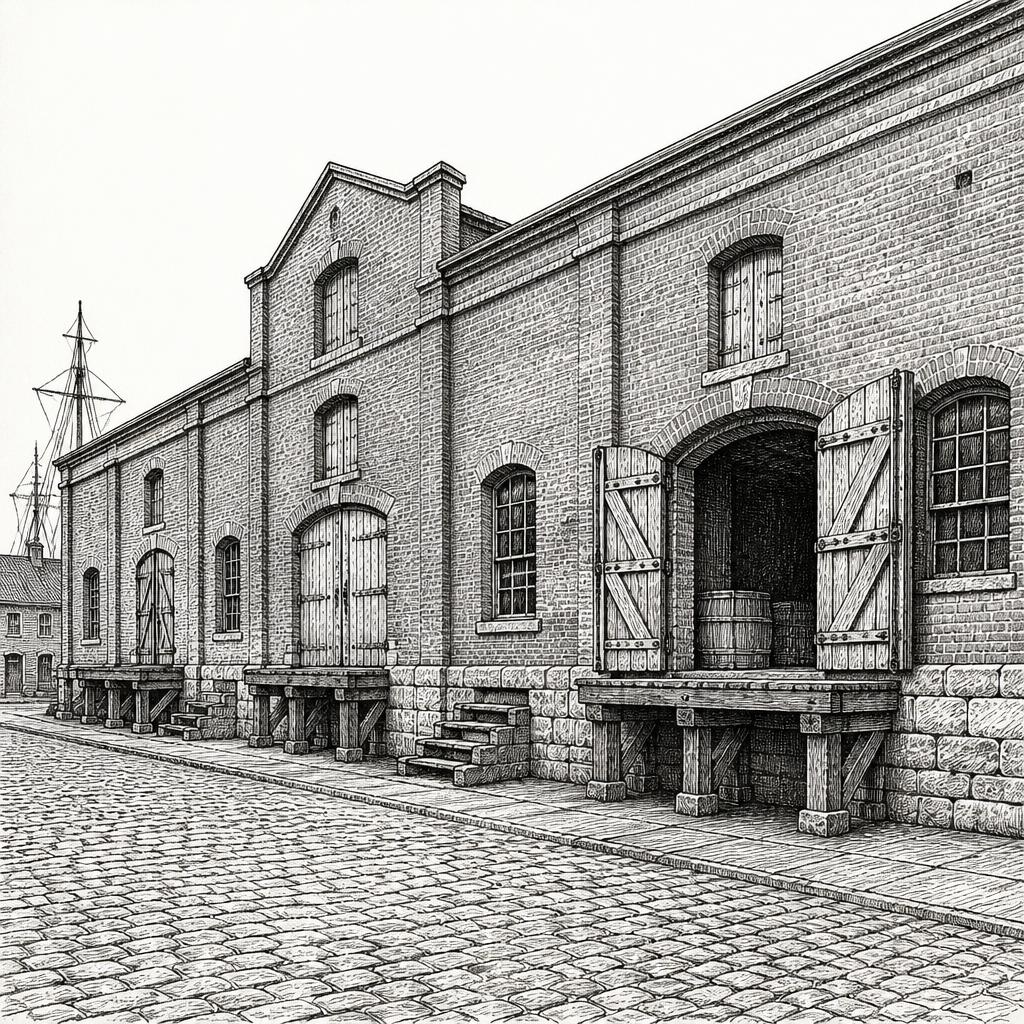
North along the working waterfront — Civil War-era warehouse blocks and freestanding Erie Basin buildings, rawer and more isolated than Sunset Park, with no subway at all and the flood zone to plan around.
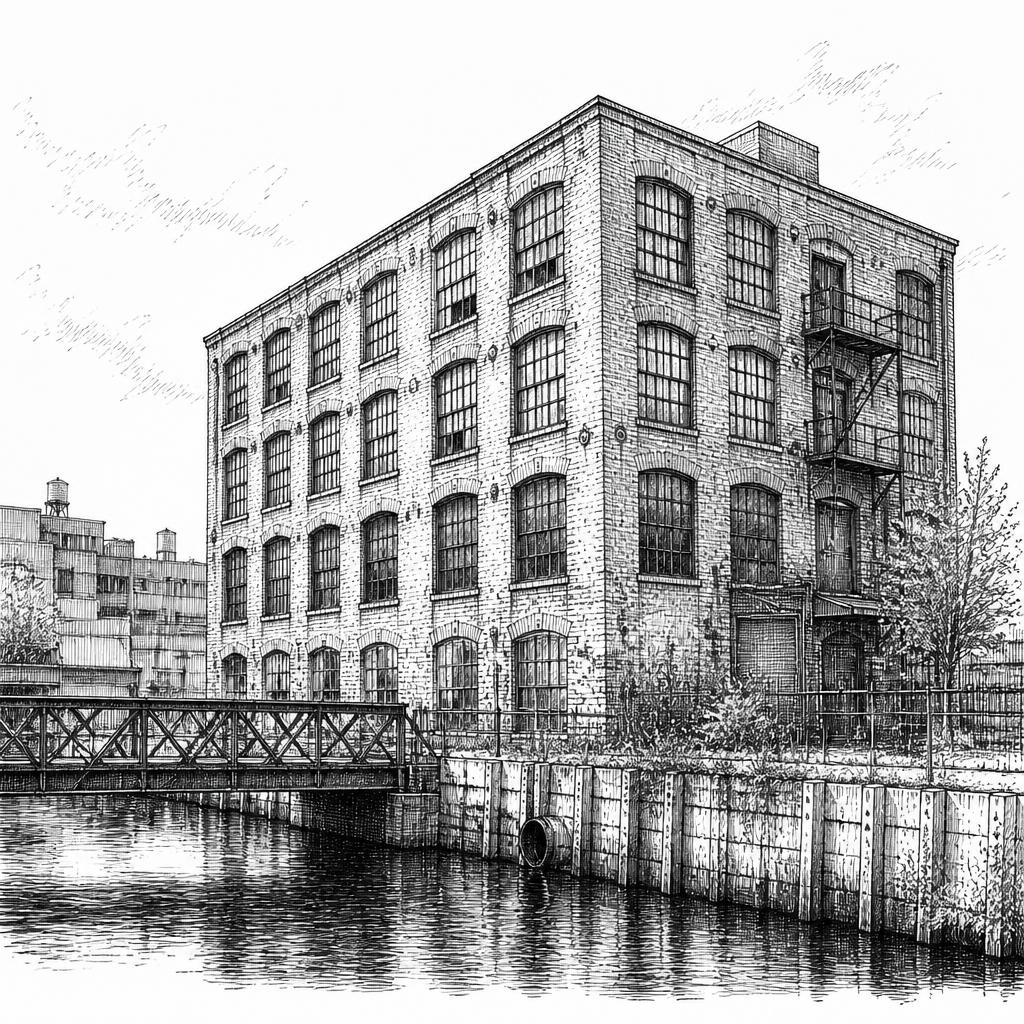
Inland along the canal — low-rise roll-up-door industrial with ground-floor fabrication space, closer to brownstone Brooklyn but carrying the zoning uncertainty of an active rezoning rather than Sunset Park's locked-in industrial protection.
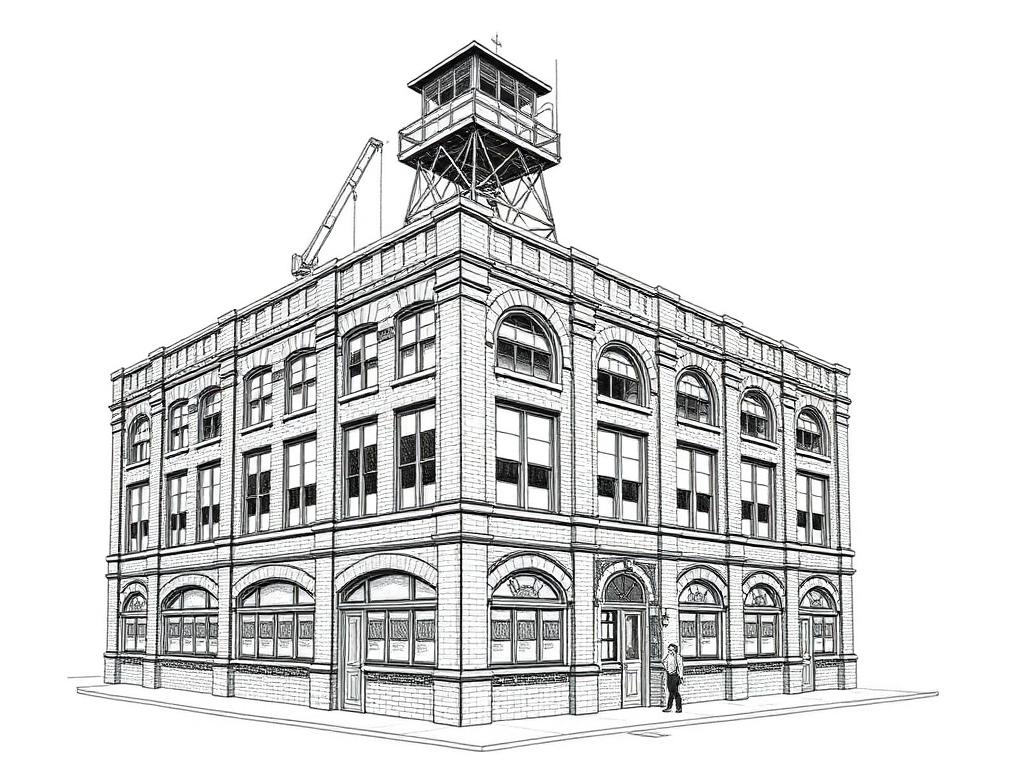
North, and the cautionary tale — heavy-timber and concrete daylight factories every bit as good as Sunset Park's, but residential rezoning took the industrial protection with it, so the making space became offices and apartments.
What people ask before they take a Sunset Park loft.
01What counts as a 'creative office loft' in Sunset Park?
02How much does loft or industrial space in Sunset Park cost?
03How do I actually get to Sunset Park?
04Can I do fabrication, food production or manufacturing here?
05What's the catch with Sunset Park space?
06What's the smallest space I can rent in Sunset Park?
07Who owns the buildings in Sunset Park?
08How is Sunset Park different from Red Hook or Gowanus for workspace?
09What buildings are the classic Sunset Park lofts?
10Do you actually have off-market listings?
Got one we didn't cover? Put it in the brief above, or call 646-291-2018.
The words that decide what you're signing.
Every term that turns up on a tour, in a floor plan or in a lease — what it means, why it costs you, and how it behaves in this neighborhood specifically.
- Daylight factory
Early-twentieth-century reinforced-concrete industrial construction — a concrete frame carrying the load, so the walls become ranks of enormous steel-sash windows, with high ceilings and heavy floor capacity.
Why it mattersBig clear plates, real light and serious floor load — the most flexible industrial stock ever built, which is why it converts so well to design, production and studio use.
In Sunset ParkThis is the old Bush Terminal stock on the waterfront — most of it now inside professionally managed campuses with their own leasing operations, which shapes how you get in as much as what the floors are like.
- Independent industrial building
A smaller brick, timber or masonry industrial building held by an individual owner rather than a campus or institution — leased directly, often informally subdivided, often never advertised.
Why it mattersRawer space at independent-owner terms, with more variation in management quality from one landlord to the next — and most of it moves person to person rather than through listings.
In Sunset ParkThe blocks upland of the waterfront and along the avenues. This is where Sunset Park's woodworkers, metal shops, auto trades and small fabricators actually are, and it's the part of the market we focus on.
- Industrial Business Zone
A New York City zoning designation that protects an area from residential rezoning, keeping the land available for manufacturing and industrial use.
Why it mattersIt's the reason this stock still exists as industrial space instead of getting converted or torn down for housing, the way it has in neighborhoods without the protection.
In Sunset ParkSunset Park's waterfront and upland industrial blocks were designated in 2006 and have held since — the single biggest reason this remains the most genuinely industrial market in Brooklyn.
- Certificate of occupancy
The city document stating what a building is legally permitted to be used for, floor by floor.
Why it mattersIt governs your use regardless of what the lease says or what the last tenant did.
In Sunset ParkWorth checking on every independent building here — the mix of legal uses varies more owner to owner than inside a professionally managed campus, where the leasing office handles it.
- Freight elevator
A goods lift, usually with manual gates, rated in pounds. Not every building here has one.
Why it mattersCapacity and existence both decide what you can move in and how.
In Sunset ParkThe campus buildings have real freight infrastructure. In the smaller independent buildings, ask whether a freight elevator exists at all — a real share of that stock is ground-floor or walk-up — and whether the car opens into your own space or a shared corridor.
- Floor load
The weight a floor is rated to carry, in pounds per square foot. Live load is what you can put on it; dead load is the structure itself.
Why it mattersHeavy equipment, dense storage or production machinery all need a number in writing before anything is ordered.
In Sunset ParkThe concrete daylight-factory floors were built for machinery and carry serious ratings. The older timber-framed independent buildings vary far more — get the rating for your specific floor, not the building.
- Clear-to-deck
The distance from the finished floor to the underside of the structure above — the true ceiling height, before ductwork, sprinklers or lighting.
Why it mattersBrokers quote the highest number in the room. Retrofitted mechanical runs can take real height off what you actually get.
In Sunset ParkAsk for clear-to-deck and separately for the height under the lowest duct or pipe — a century of retrofitted sprinklers and mechanicals hangs from these ceilings, campus and independent stock alike.
- Loss factor
The gap between rentable square feet, which is what you pay for, and usable square feet, which is what you can occupy.
Why it mattersIt moves your real cost more than negotiating the face rent does.
In Sunset ParkLive in both directions here: in the managed campus buildings the loss factor is real and worth normalizing, while in the independent buildings the measurement itself can be informal — always ask which basis you're being quoted on.
- Sublease
Space leased from an existing tenant rather than directly from the landlord, for the balance of their term.
Why it mattersOften cheaper and comes built out, but you inherit someone else's term and restoration obligations.
In Sunset ParkMore common inside the campus buildings, where established tenants downsize, than among the independent owners — where most deals are straight from the owner.
- Letter of intent
A short document setting out the commercial terms before lawyers draft a lease. Generally non-binding, except for any confidentiality or exclusivity clauses inside it.
Why it mattersTerms conceded in a letter of intent are hard to claw back later, and the binding parts are binding.
In Sunset ParkWith Sunset Park's independent owners this often moves fast and informally — get your terms in writing early regardless. Campus leasing runs a more standardized process.
- Good Guy Guarantee
A limited personal guarantee, near-universal in New York commercial leases. You personally guarantee the rent only until you vacate, provided you give notice, hand the space back broom-clean, and are current on rent.
Why it mattersIt's the difference between walking away owing two months and owing the balance of the term.
In Sunset ParkStandard here as everywhere in the city — worth confirming in writing with a smaller independent landlord whose lease template may be less buttoned-up than a campus leasing office's.
- Escalation
How the rent rises over the term — usually a fixed annual percentage.
Why it mattersA rent that looks flat on year one is not flat over a five-year term. Budget from the last year, not the first.
In Sunset ParkAsk directly — Sunset Park's independent owners are less likely to have a standardized escalation structure than a campus leasing operation, so terms vary building to building.
- TI allowance and work letter
The improvement money a landlord contributes to a build-out, and the document defining who builds what, to what standard, and who pays for it.
Why it mattersWithout a work letter you can find yourself paying for basics you assumed came with the space.
In Sunset ParkExpect more improvement money from a campus landlord and close to none from an independent owner — most of the independent stock leases near as-is, which is also why it prices the way it does.
You know what to ask now. Tell us what you're after.
Seven questions, no account, nothing to download. A person reads every one — and comes back with floors that match, including the ones that never reach a listing site.
Written from buildings we've actually walked. If something here is wrong, or a term is missing, tell us — we'd rather fix it than have it repeated back to us on a tour.
Got a loft
building here?
We probably know a tenant for it. Quietly.
Let's talk→